
ISTAR: A Smart Shoulder Garment for Chronic Shoulder Pain Therapy
In the research project I.S.T.A.R. Control (in German: “Intelligenter Schultergürtel für Therapie, Training, Aktivierung und Rehabilitation mit Feedback-Kontrolle”), a consortium of industry, clinical and research partners is developing a smart sensor textile for the upper body. It is designed to support people with chronic shoulder pain (lasting more than three months) in their conservative therapy.
The garment brings several functions together:
- Data transmission: An integrated 5G module sends the sensor data straight to a backend, so no smartphone is needed as an intermediary.
- Sensing: Position, acceleration, strain and EMG sensors capture posture and movement in everyday life, with no need for external measurement equipment such as camera systems.
- Feedback: Vibrotactile signals are intended to correct poor posture and faulty movement patterns.
- Electrical stimulation: It is meant to support weakened muscle groups during training and to relieve acute pain.
- Pain logging: Feedback buttons built into the textile let patients record pain episodes with a simple touch.
Background
Shoulder complaints are among the most common reasons for visiting a doctor. Studies suggest that well-executed conservative exercise therapy can achieve results comparable to surgery after one year. Physiotherapy, however, cannot be scaled indefinitely, and in everyday life motivating feedback and progress tracking are often missing. Existing shoulder braces are mainly designed to immobilize the joint. I.S.T.A.R. Control instead combines exercise therapy, pain therapy and the analysis of everyday movements in a single system, and is meant to support therapy between appointments, regardless of where patients live or how well they are served by local care.
The Role of mbits
mbits is responsible for software development and thus for the interface between hardware and users. Our tasks include:
- Backend: We are building the infrastructure that receives the textile’s sensor data in real time, processes it in compliance with the GDPR and stores it securely.
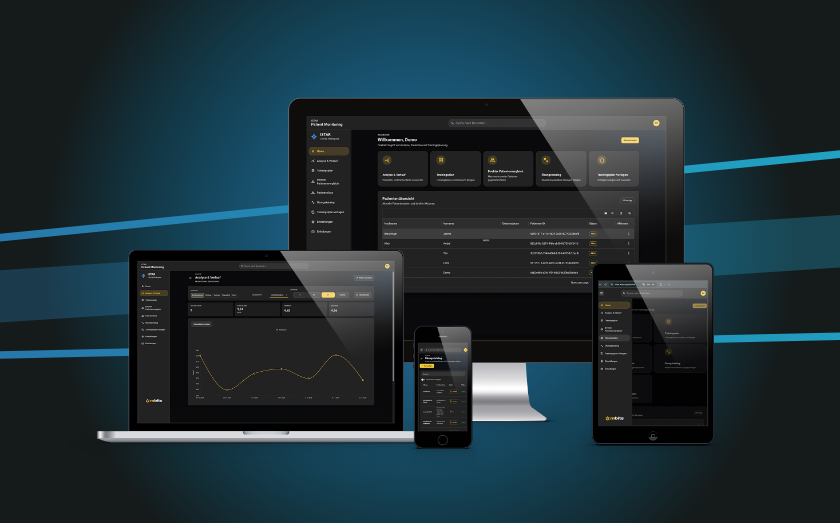
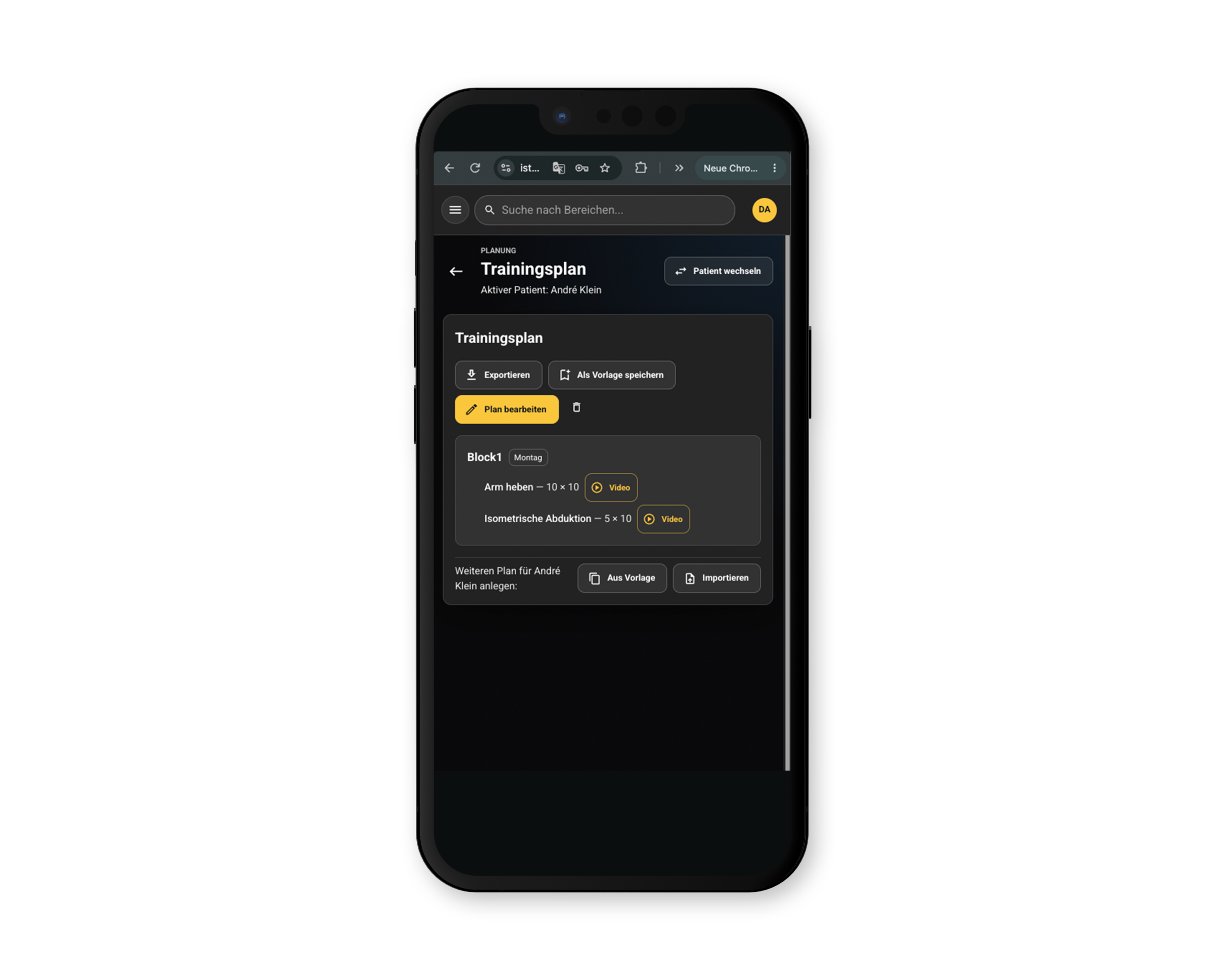
- Web-App: A responsive web app makes measurement data, movement patterns and training progress visible to patients and clinicians on any device.
- Training plans: Individual training plans are generated from the measurement data and physiotherapeutic guidelines.
- Data analysis: We are investigating whether pattern recognition methods can show which training plans have helped patients with similar pain profiles.
Who Else Is Involved?
The consortium consists of seven partners:
Fraunhofer ISC: sensor materials and textile integration
Sporlastic GmbH (project coordination): textile structures and sensor integration
ABECO Industrie Computer GmbH: electronics for sensing and actuation
Evomotion GmbH: electrical stimulation and vibration modules
Universitätsklinikum Heidelberg, Klinik für Orthopädie: clinical support and evaluation
Fraunhofer IPA: requirements analysis, biomechanics, sensor development
The project is funded by the Federal Ministry of Research, Technology and Space (BMFTR). .
Outlook
The goal of the project is a working demonstrator in which sensors, actuators, textile and software function together as a complete system. In the coming months, the focus will be on integrating the components and testing them within the development team. Looking further ahead, regulatory approval as a medical device and clinical studies are planned to investigate the system’s effectiveness. We will keep you posted.